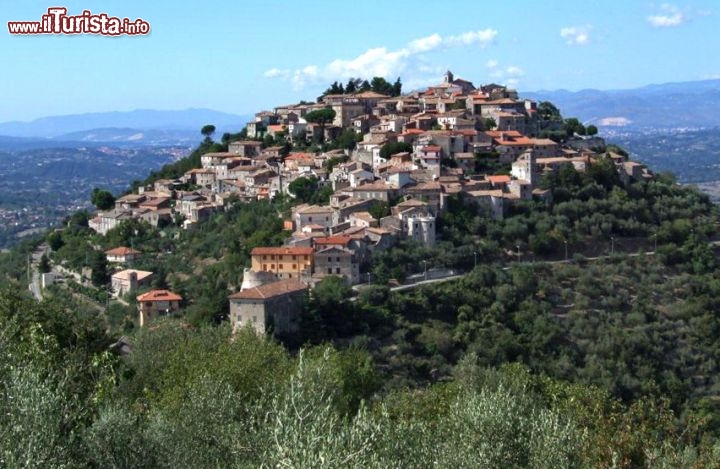
Castro dei Volsci (Ciociaro: Cascetre) is a comune (municipality) in the Province of Frosinone in the Italian region of Lazio. Located about 90 kilometres (56 mi) southeast of Rome and approximately 14 kilometres (9 mi) southeast of Frosinone, it sits at an elevation of 385 metres above sea level. As of 2017, it had a population of 4,745.
The town is a member of the association "I Borghi più belli d'Italia" ("The most beautiful villages of Italy").
History
The origins of Castro dei Volsci date back to the pre-Roman era, when the area was inhabited by the Volsci, an Italic tribe known for their resistance against early Roman expansion. Archaeological excavations on the surrounding hills have revealed stone fortifications and defensive walls attributed to the Volsci, dating to the 5th century BCE.
The town was gradually integrated into the Roman Republic during the Roman-Volscian wars of the 4th century BCE. Castro dei Volsci likely became part of a network of fortified settlements used to control the Sacco Valley. Traces of Roman roads and rural structures, including villae rusticae, have been documented in the surrounding territory.
Following the collapse of the Western Roman Empire, the region came under the control of various powers, including the Lombards and Byzantines, before eventually being absorbed into the Papal States. During the medieval period, Castro dei Volsci emerged as a fortified hill town. The development of the local castle and defensive walls reflects the turbulent political environment of central Italy. From the 13th to the 16th centuries, the town was controlled by noble families, notably the Colonna family, who held vast estates in the region.
In the early modern period, the town remained under Papal authority. It saw modest growth during the Renaissance, with the construction of churches and civic buildings. The Counter-Reformation brought renewed religious activity, including church restorations and local pilgrimages. Agricultural life dominated the local economy, structured around sharecropping and small-scale landholding.
In the 19th century, Castro dei Volsci was affected by the political upheavals of the Risorgimento and was eventually annexed into the newly unified Kingdom of Italy. During World War II, the area experienced hardship due to its proximity to the Gustav Line. Allied and German forces moved through the region, and many buildings were damaged. Postwar reconstruction and emigration led to demographic shifts, with many residents relocating to urban centers.
Geography
Castro dei Volsci is situated in the Ausoni Mountains, overlooking the Sacco Valley. The municipal territory covers 58.3 square kilometres and includes 28 frazioni (hamlets), such as Barbugliano, Camporosello, Cavatelle, Centro Storico, Collecavallo, and Stazione. The surrounding terrain is hilly and predominantly agricultural, with olive groves, vineyards, and wooded areas.
The town borders the municipalities of Amaseno, Ceccano, Ceprano, Falvaterra, Lenola, Pastena, Pofi, Vallecorsa, and Villa Santo Stefano.
Demographics
According to ISTAT data, Castro dei Volsci had a population of approximately 4,745 in 2017. Historical population records indicate a gradual decline since the mid-20th century, reflecting broader demographic trends in rural Lazio. Emigration, particularly to Rome and abroad, contributed to population decrease, though seasonal return migration remains common.
Main sights
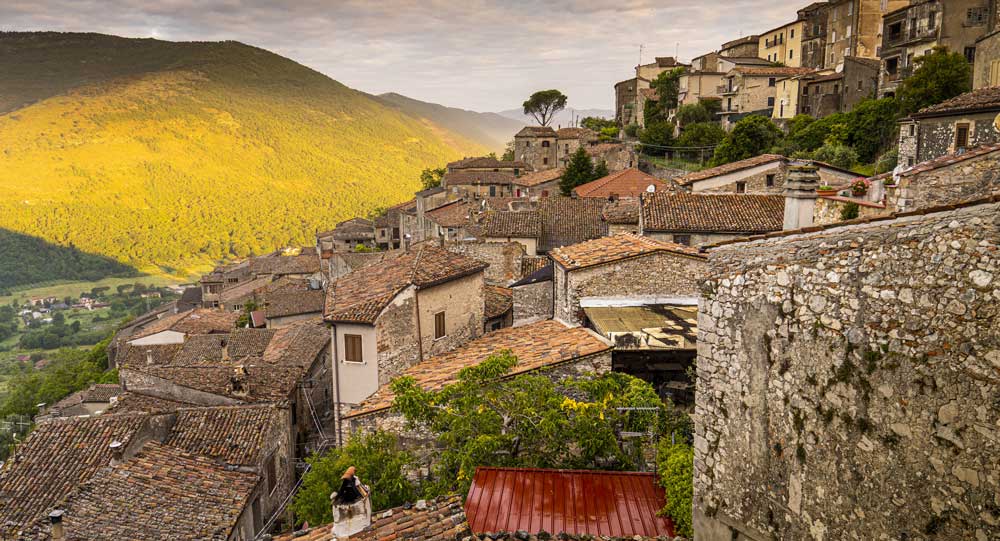
- Historic Center: The old town retains its medieval layout, with narrow, winding streets, stone houses, and fortified gateways.
- Church of Santa Maria: A Romanesque-style church dating to the 12th century, it features 15th-century frescoes and a bell tower with Gothic elements.
- Palazzo Ducale: A 16th-century noble residence, once home to local ducal authorities.
- Archaeological Museum: Houses artifacts from the Volscian and Roman periods, including pottery, tools, and inscriptions.
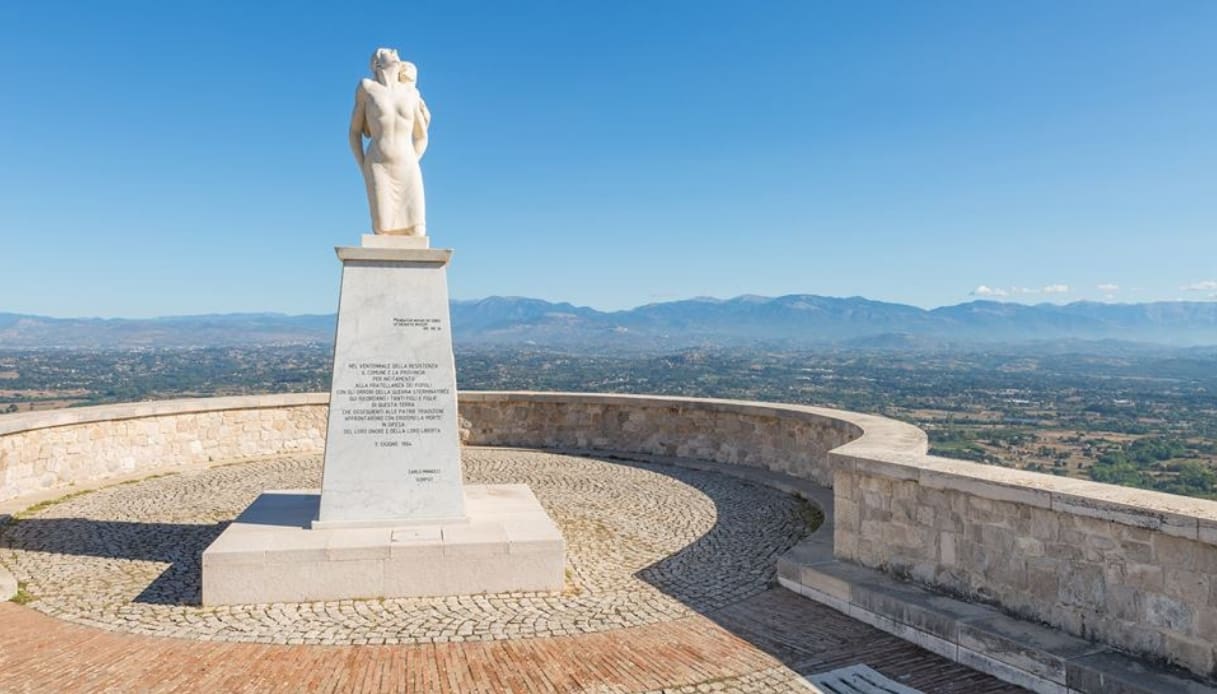
- Monument to the Mamma Ciociara: A bronze statue commemorating the suffering of local women during World War II, inspired by the 1960 film La Ciociara.
Culture
Castro dei Volsci maintains strong connections to Ciociarian identity, especially in its dialect, cuisine, and traditional dress. Festivals include the annual celebration of the town's patron saint, St. Oliva of Anagni, held on June 3, which features a religious procession, music, and communal meals.
Local gastronomy emphasizes handmade pasta, sheep’s cheese, legumes, and regional wines. Cultural associations organize folk events and support the preservation of oral traditions and rural crafts.
The town is also the birthplace of actor Nino Manfredi (1921–2004), a leading figure in Italian cinema. A museum dedicated to his life and career is located in the historic center.
Economy
The local economy is primarily agricultural, centered on olive oil production, vineyards, and artisanal food products. Traditional farming methods coexist with small-scale agritourism. The town's cultural and historical appeal has also contributed to a growing tourism sector, supported by its status as one of Italy's "most beautiful villages."
Transportation
Castro dei Volsci is accessible via regional and provincial roads, with connections to the A1 motorway. The nearest train station is located in the frazione of Stazione, on the Rome–Naples railway line via Cassino.
References